Executive Summary
The enterprise data center market in 2025 is a dynamic, rapidly evolving ecosystem driven by the unrelenting demand for data processing, storage, and connectivity. Valued at billions of dollars globally, this market reflects a seismic shift in how organizations manage their IT infrastructure. Enterprises—ranging from large corporations to small and medium-sized businesses (SMEs)—are navigating a landscape shaped by cloud adoption, artificial intelligence (AI), edge computing, and sustainability imperatives. Today’s enterprise data centers are no longer just physical facilities; they are hybrid, intelligent, and increasingly autonomous hubs that power digital transformation across industries. This overview explores the market’s current state, key trends, growth drivers, challenges, and future outlook as of early 2025.
Market Landscape and Scope
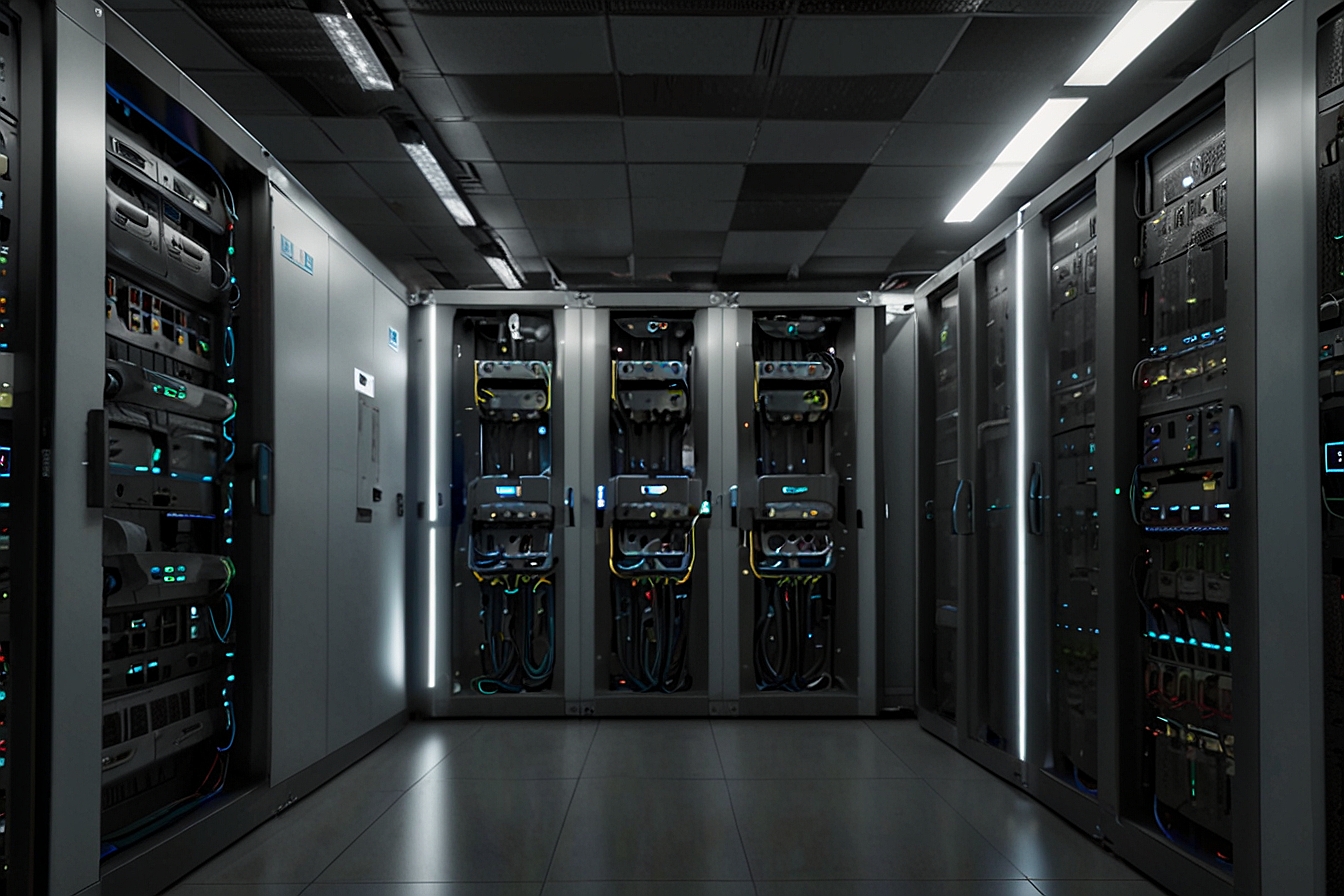
The enterprise data center market encompasses facilities and solutions designed to support an organization’s internal IT operations, distinct from hyperscale or colocation centers used by cloud providers or third-party tenants. These centers house servers, storage systems, networking equipment, and support infrastructure (e.g., power and cooling) to process, store, and disseminate data critical to business functions. In 2025, the market is characterized by:
- Size and Growth: While exact figures vary, the global data center market (including enterprise segments) was valued at approximately $248.72 billion in 2023, with projections to exceed $398.80 billion by 2029 at a compound annual growth rate (CAGR) of 8.19%. Enterprise-specific investments remain a significant portion, driven by digital workloads and modernization efforts.
- Segmentation: The market splits across on-premises data centers, hybrid models integrating cloud services, and emerging edge facilities. Large enterprises dominate spending, but SMEs are increasingly adopting modular and managed solutions.
- Geographic Leaders: North America holds the largest share (over 36% in 2023), fueled by tech giants and early cloud adoption, while Asia-Pacific (APAC) is the fastest-growing region, adding 24GW of capacity in the last decade, surpassing North America’s 22GW.
Key Trends Shaping the Market
1. Hybrid and Multi-Cloud Dominance
Enterprises are moving away from purely on-premises setups toward hybrid architectures that blend private data centers with public cloud services (e.g., AWS, Azure, Google Cloud). This shift, accelerated by multi-cloud strategies, allows flexibility, scalability, and cost optimization. In 2025, hybrid models are the norm, with enterprises leveraging on-site infrastructure for sensitive workloads and cloud resources for burst capacity or analytics.
2. AI and High-Performance Computing (HPC) Surge
AI is a transformative force, driving unprecedented demand for compute power. Enterprise data centers are upgrading to support GPU-intensive workloads for machine learning, generative AI, and real-time analytics. Rack power densities have climbed from 4–5 kW a decade ago to over 50 kW today, reflecting the need for HPC to handle data-intensive applications.
3. Edge Computing Expansion
The rollout of 5G and the Internet of Things (IoT) has fueled edge data center growth. Enterprises deploy smaller, distributed facilities closer to end-users to reduce latency for applications like autonomous systems, smart manufacturing, and streaming. Micro data centers—portable and modular—are gaining traction, especially for SMEs seeking cost-effective scalability.
4. Sustainability as a Core Priority
With data centers accounting for 1–2% of global electricity use, sustainability is non-negotiable. Enterprises are adopting green technologies—renewable energy, liquid cooling, and AI-optimized power management—to lower power usage effectiveness (PUE) ratios (ideally 1.2–1.5). Regulatory pressure and corporate ESG goals further drive this trend, particularly in North America and Europe.
5. Automation and Lights-Out Operations
Automation is revolutionizing enterprise data centers, with some moving toward “lights-out” models where AI, robotics, and remote management eliminate the need for on-site staff. This reduces costs, boosts efficiency, and enhances security, though full adoption remains limited to advanced players.
Market Drivers
- Data Explosion: Global data generation is projected to grow five-fold from 2019 to 2025, driven by social media, IoT, and digital transactions. Enterprises need robust infrastructure to store and process this deluge.
- Digital Transformation: Remote work, e-commerce, and cloud-native applications (e.g., SaaS) demand reliable, scalable data centers. The COVID-19 pandemic accelerated this shift, and the momentum persists.
- AI and Analytics: Enterprises leverage AI for predictive insights and operational efficiency, requiring data centers with advanced hardware (e.g., GPUs, TPUs) and software (e.g., virtualization, DCIM).
- 5G and Connectivity: Faster networks enable new applications, increasing reliance on edge and core data centers for seamless performance.
- Regulatory Compliance: Data privacy laws (e.g., GDPR, CCPA) push enterprises to maintain on-premises or hybrid setups for sensitive data, balancing security with cloud benefits.
Challenges Facing the Market
- Power Constraints: A global shortage of reliable power inhibits growth. Primary markets like Singapore (1% vacancy, 7.2 MW available) and Frankfurt (6% vacancy) face capacity limits, while secondary markets with ample power (e.g., Dallas-Ft. Worth) gain traction.
- High Costs: Building or upgrading data centers involves steep capital expenditures—land, hardware, cooling, and redundancy systems. Ongoing operational costs (energy, maintenance) further strain budgets.
- Talent and Skills Gap: Managing sophisticated, automated facilities requires specialized expertise, yet the industry faces a shortage of skilled engineers and IT professionals.
- Supply Chain Delays: Construction timelines lag due to shortages in chips, cooling systems, and power equipment, delaying deployments and raising costs.
- Security Risks: As cyber threats evolve, enterprises must fortify physical and digital defenses, a costly and complex endeavor in unmanned setups.
Competitive Landscape
Key players in the enterprise data center market include:
- Hardware Vendors: Dell Technologies, Hewlett Packard Enterprise (HPE), Cisco Systems, Lenovo, and NVIDIA, providing servers, storage, and networking gear.
- Software Providers: VMware, Microsoft (Windows Server), and Red Hat, offering virtualization and management tools like DCIM.
- Infrastructure Giants: Schneider Electric, Eaton, and Vertiv, supplying power and cooling solutions.
- Service Providers: IBM, Equinix (for colocation synergies), and HCL Technologies, delivering managed services and consulting.
Mergers, acquisitions, and partnerships are rampant as companies vie for market share. For example, Schneider Electric’s 2024 collaboration with Digital Realty highlights a focus on maintaining mission-critical systems efficiently.
Future Outlook
By 2030, the enterprise data center market is poised for significant evolution:
- Investment Surge: Global data center CapEx could double from $430 billion in 2024 to $1.1 trillion by 2029, with enterprises contributing heavily due to AI-driven demand.
- Edge and Modular Growth: Edge facilities will proliferate, supported by modular designs that allow rapid deployment and scalability.
- Green Innovation: Expect wider adoption of renewable energy and advanced cooling (e.g., immersion cooling) to meet net-zero targets.
- Autonomy Expansion: Lights-out data centers will gain ground, especially among large enterprises, as automation matures and trust in AI deepens.
The market’s trajectory hinges on balancing innovation with practicality—solving power shortages, optimizing costs, and ensuring resilience in an increasingly data-centric world.
Conclusion
Today’s enterprise data center market is at a crossroads, blending traditional infrastructure with futuristic technologies. As of February 20, 2025, it’s a vibrant arena where AI, edge computing, and sustainability converge to meet enterprise needs. While challenges like power scarcity and costs loom large, the opportunities—efficiency gains, scalability, and competitive advantage—are driving relentless investment and innovation. This is not just about keeping the lights on; it’s about turning them off and letting intelligence take over.